So what was this all about?
It was about a bird that breathes from the heavens themselves, pouring out the most mournful, soul-searching notes in ornithology — a god-skylark commanding the air above wild landscapes, igniting our deepest passions for the natural world. From that song came something rarer still: the coming together of people with a single, shared purpose — to save the Curlew, like no other.
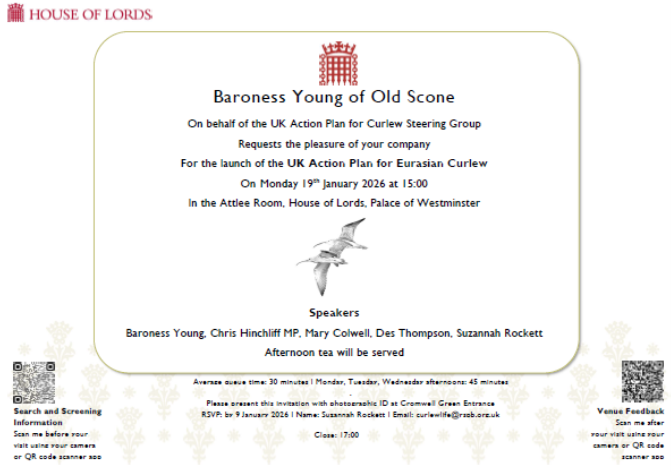
And so we stood in the cramped rooms of the House of Lords, united by our love for a single species. The event opened not with words but with the recording of the Curlew’s beautiful, wistful, wild cry. The UK Curlew LIFE Plan brings together an unlikely set of bedfellows for the common good, an exemplar of collaboration, with Curlew Action, headed by Mary Colwell, acting as a ‘convener’ for all parties.
Science- and evidence-led data, validated by the BTO, has at last helped break long-held deadlock, allowing difficult agreements to be reached — including giving voice to the once-taboo subject of predator control. Refreshing, this marks a welcome shift towards a more pragmatic, outcomes-focused approach to conservation. We are where we are, and, as important as habitat improvement is, we know that, however hard we work, along with many other ground-nesting birds, Curlews struggle to raise eggs and chicks to the relative safety of fledging.
The Eurasian Curlew is an iconic and widely loved bird of the UK’s farmland and uplands, but its population — now red-listed — is in severe decline, having disappeared from many lowland areas. It is a top conservation priority. Remaining sustainable populations are largely confined to managed upland moorland and nearby farmland, where collaborative efforts by farmers, landowners, gamekeepers, and conservationists have shown that declines can be halted and recovery is possible, highlighting the importance of active land management. Supporting farmers at scale is essential to prevent further losses and to avoid the Curlew becoming as marginalised as the Corncrake.
The UK supports around a quarter of the European breeding population, making national stewardship critically important. Since the mid-1990s, Curlew numbers have halved in England and Scotland and fallen by over 80% in Wales and Northern Ireland. Without urgent action, the species risks suffering the same fate as other Numenius species, becoming restricted to isolated strongholds.
The Curlew is a flagship species whose conservation benefits extend far beyond the bird itself. Management aimed at supporting Curlew also helps many other ground-nesting and declining wader species, including Lapwing, Redshank, Golden Plover, Snipe, Dunlin, and Whimbrel. In addition, Curlew-focused conservation supports vital ecosystems, including peatlands, floodplain grasslands, mudflats, and salt marshes. These landscapes deliver wide-ranging benefits, including habitat for other threatened species, carbon storage, water regulation, agricultural productivity, and significant recreational and health value for people.
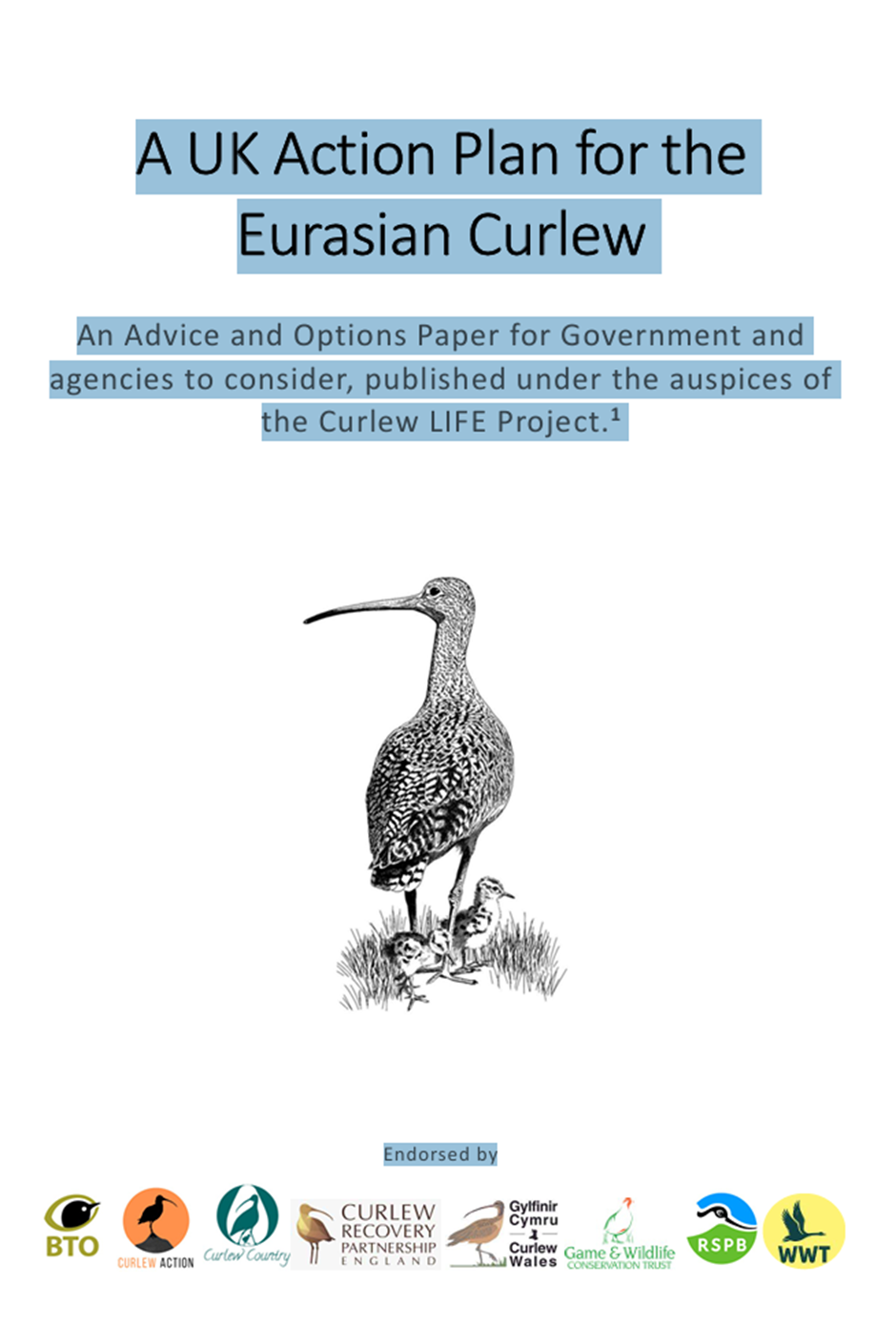
The UK Action Plan, developed through the Curlew LIFE Project, provides a coordinated framework to help governments meet their national and international obligations, including those under the AEWA Action Plan. It aims to unify efforts across the UK, support national initiatives such as the Welsh Action Plan, and drive effective, large-scale conservation for Curlew and the landscapes it depends on.
Actions
By harnessing the bird’s broad public support and securing commitment from governments and agencies, meaningful and lasting conservation success is achievable. The plan is divided into six key actions:
Curlew Action, the RSPB, BTO, JNCC, DEFRA, WWT, and representatives from all four nations presented throughout the evening before the discussion was opened to questions from the floor — and, as is so often the case, it was the audience questions that brought the reality sharply into focus, pressing the speakers on how these plans will actually be implemented:
For full details of the UK Action Plan from Curlew LIFE, open the link below:
UK-Action-Plan-for-the-Eurasian-Curlew.pdf