GCSE for Natural History
What better legacy than to pass that knowledge to the next generation before it disappears with us?
Speaking at my first literary event, Well Read at Wasing, about my book, One Day a Thousand Songs, I found myself saying something I had never voiced before:
“My worry is, when I die, who will champion our landscapes and wildlife?”
It came from somewhere deeper than the prepared notes I had brought with me.
A few days later, as I was making the final preparations for an annual salmon fishing trip with friends, someone asked, “Who’s got the first aid kit?”
It was such an ordinary question. Yet it stopped me in my tracks. The question about the first aid kit, never previously considered, and the words I had spoken at Wasing were, in truth, asking the same thing. Not whether I was prepared for an accident, but whether I was prepared for mortality. There is still so much to do and teach.
Now I am not alone in championing the curlew, the wild Atlantic salmon, dust-bathing sparrows, or even ‘Private’ Rhagonycha fulva. But how many of us are left—and how old are we becoming? We are in danger of skipping a generation in instilling not just a love of natural history and the countryside, but also an immersive, grounding experience for people throughout their lives.
So, it was a good way to end the week to see that the proposed GCSE in Natural History, first suggested by Mary Colwell, way back in 2011, has finally been released for public consultation.
New GCSE subjects are extremely rare. Apart from the new BSL (British Sign Language) GCSE, introduced in 2025, there has not been a totally new subject for decades. Which means the introduction, the training, and therefore the ease with which schools can offer it will play a key part. But before we consider this, let’s just summarize the course.
Aims
To develop a student’s knowledge and understanding of the natural world, including UK habitats and species, through direct fieldwork and the study of living organisms in situ. It will combine practical field skills with scientific observation and analysis, along with an understanding of human impacts, climate change, and ecological relationships, such as migration, invasion, and species interdependence.
Knowledge and understanding
Require students to understand the main groups of UK wildlife (including invertebrates, vertebrates, plants, lichens, and fungi) and how to distinguish their key characteristics, as well as the major UK habitats (urban, freshwater, woodland, grassland, farmland, and marine). Note that moorland is missing here, which is why the consultation is so important. Students will study how habitats function, form, and change over time through processes such as succession, species interdependence, and ecological interactions, and use indicator species and biodiversity to assess habitat health.
They will also learn how species are identified using taxonomic keys, how organisms adapt to seasonal change and climate pressures, and how ecosystems are interconnected across space and time. The specification further includes an understanding of long-term environmental change in the UK, using fossil and pollen records, glacial cycles, extinction events, and past climate variation to show how landscapes and wildlife have evolved and been shaped through both natural processes and human influence.
Fieldwork
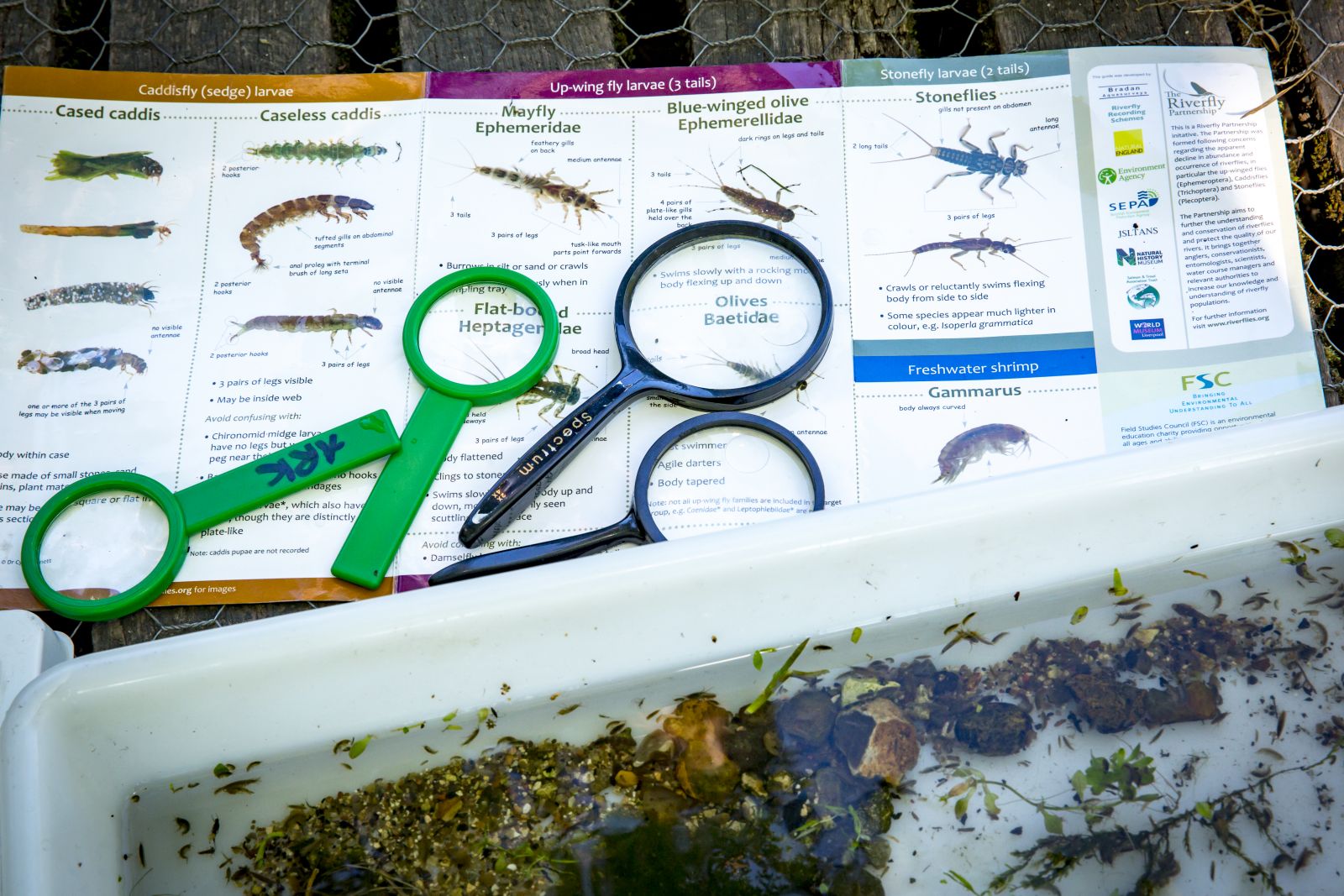
Include at least 20 hours of fieldwork outside the classroom, giving students direct experience of the natural world through locally chosen sites, including school grounds. Schools will have flexibility in how and where they deliver this, but must ensure students observe, engage with, and reflect on nature, with formal evidence of fieldwork completed provided by centres. Fieldwork is intended to build practical skills, deepen nature connection, and underpin learning assessed indirectly in exams.
I would call that rounded. It will benefit from some further strengthening around the historical context of wildlife populations—particularly species richness and abundance, and how these have changed over time. This links directly to what Jared Diamond describes as the “shifting baseline” effect—also known as creeping normalcy or landscape amnesia—where gradual environmental loss becomes normalised, and each generation inherits a diminished sense of what has already been lost in nature. In other words, it comes back to the question of mortality, with only “old people” like me remembering what has quietly disappeared.
But here is the really exciting piece – FIELDWORK
Simply put, it offers young people a chance to connect with their local environment. That sense of place will stay with them for life—alongside regional accents, architecture, soundscape and landscape—but now, hopefully, with a deeper identity rooted in the living world around them: what grows, what lives there, and how it all fits together. That is priceless.
So, in addition to being a recognised qualification, it will endure through life’s experiences and travels.
Its substantial fieldwork component makes the GCSE unique—rare outside Geography—while a degree of devolved curriculum responsibility allows schools to shape elements of what is taught in line with their local environment and community. Therein lies an opportunity to inspire—not just pupils, but governors, teachers, and the wider community, to create something distinctive and deeply rooted to places where pupils live.
While local resources will dictate the availability of field centers or’ nature hubs’ or even a school playing field, this is an opportunity to embeand teachers.d schools further into local communities. Many existing primary schools already actively promote a nature agenda, and this GCSE can build on these relationships and agendas.
Having spoken to several schools, I know their biggest challenges will be finding teachers with the confidence to teach the subject and securing the budgets and time needed to undertake meaningful fieldwork in these natural history hubs. This is where communities can make a real difference. I suspect there is an
army of older people—perhaps, like me, beginning to think a little more about mortality than they once did—who have accumulated a lifetime of natural history knowledge. What better legacy than to pass that knowledge to the next generation before it disappears with us?
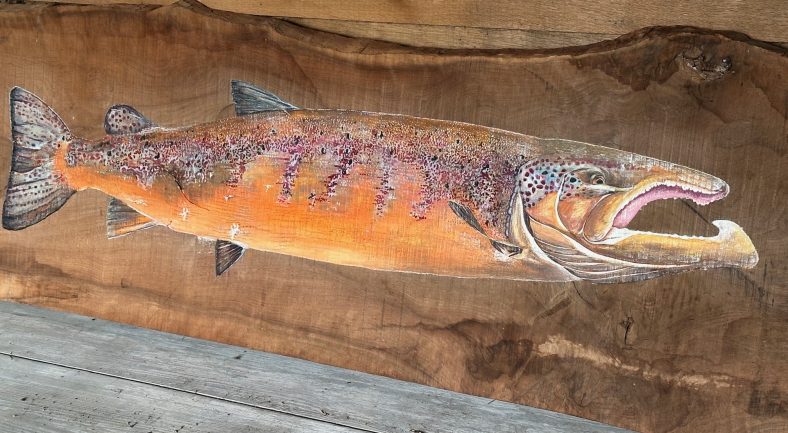
We put our fish back; we don’t eat them or stuff them in a glass case anymore, but I wanted...
Read More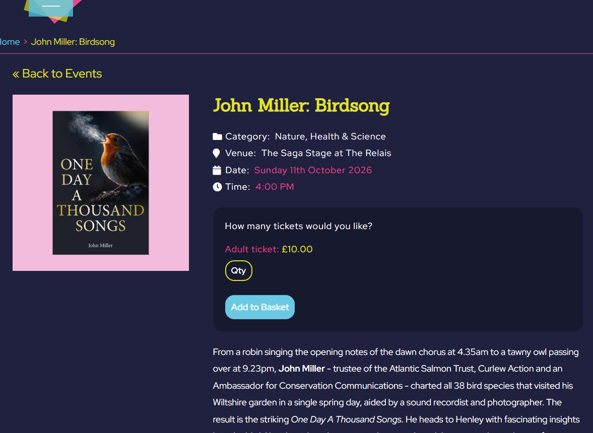
Event Details Tickets available now John Miller: Birdsong – Henley Literary Festival
Read More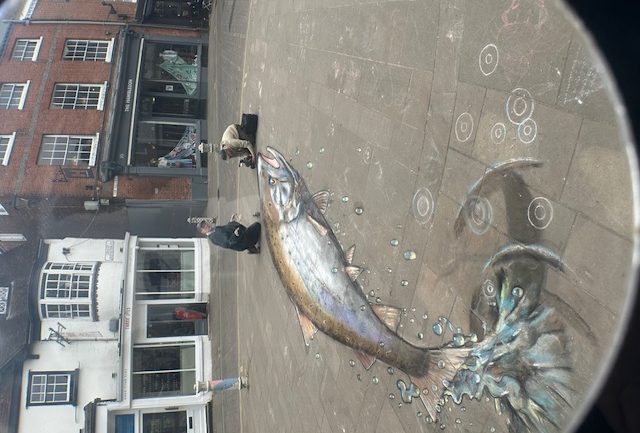
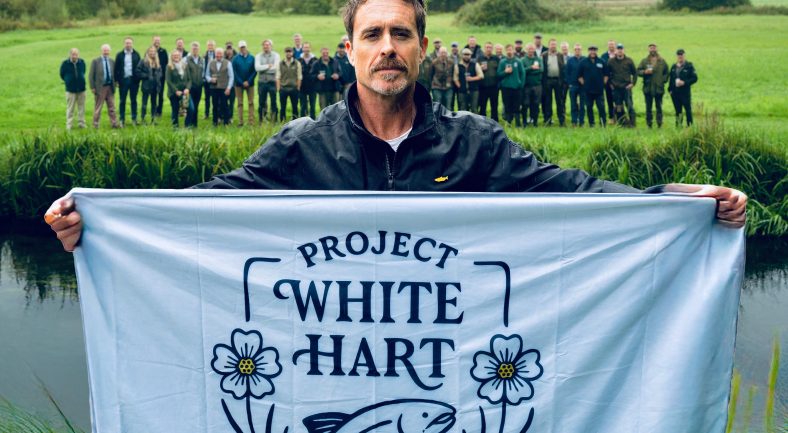
All wars eventually end through negotiation. In Project White Hart, the single biggest concern among the keepers is how the...
Read More